From Clicks to Customers: A Guide for Peshawar Businesses
tauseef
Digital Strategy Specialist
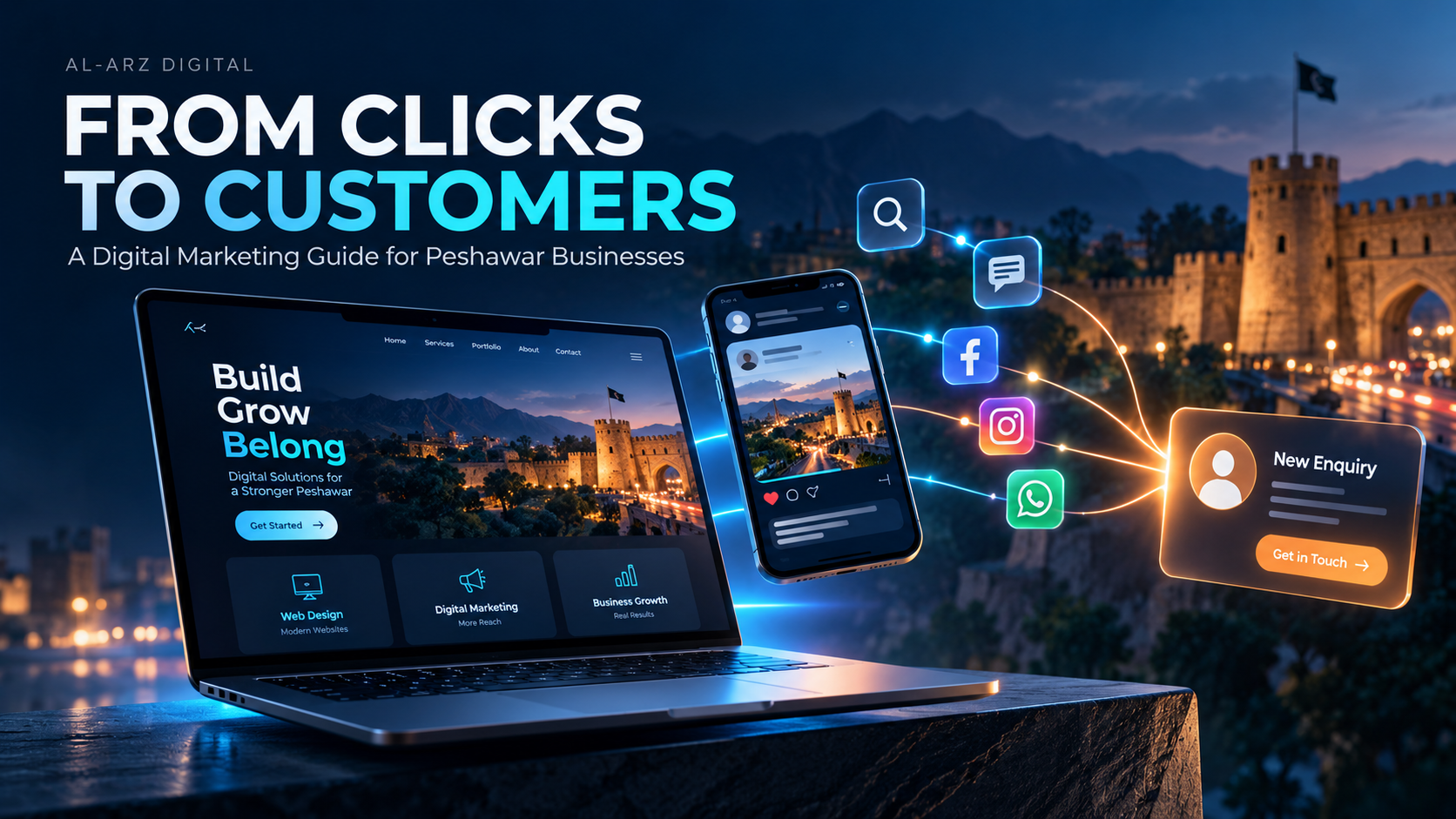
From Clicks to Customers: A Digital Marketing Guide for Peshawar Businesses
Getting attention online is only the beginning. The real opportunity comes when that attention becomes a conversation, a booking, or a sale.
For businesses in Peshawar, a strong digital presence should help potential customers understand your services, trust your business, and contact you easily. Your website, branding, social media, and advertising all play a part in that journey.
Whether you run a retail store, a restaurant, a property business, or a professional service, the starting point is the same: give customers useful information and a clear next step.
Every click is an opportunity to answer a question, build trust, and begin a customer relationship.
1. Make Your Offer Clear Before You Promote It
Before creating advertisements or publishing more content, make sure people can understand what your business offers.
A visitor should quickly recognise who you help, what you provide, and how to get started.
General statements such as “We deliver the best solutions” give customers very little information. A specific description makes your offer easier to evaluate.
For example, “Custom office furniture for Peshawar businesses, with design consultations and delivery options” explains the service and its intended audience.
Build your message around these questions:
Use that message consistently across your website, social media profiles, and promotional materials.
2. Build a Website That Helps People Take Action
Your website is often where interested visitors decide whether to contact you.
An attractive design creates a strong first impression, but visitors also need clear information. They should not have to search through several pages to understand your services or find your contact details.
Each main service page should include:
Keep contact forms simple. Ask for the information you need to begin a useful conversation, and explain what happens after submission.
Test the entire experience on a mobile phone. Open the menu, read the text, check the images, and submit an enquiry.
A useful website makes the next step feel obvious and easy.
3. Give Your Brand a Consistent Identity
Customers may discover your business through a social post, visit your website later, and eventually contact you through WhatsApp.
A consistent identity helps them recognise the same business throughout that journey.
Brand consistency includes more than a logo. It also involves the language you use, the quality of your images, and the way you present your services.
Focus on:
Choose a visual style that suits your customers and makes your content easy to understand. Give your team a few simple guidelines so future posts and pages feel connected.
4. Create Content Around Real Customer Questions
A useful content strategy begins with the questions customers already ask.
People may want to understand your prices, compare services, see previous work, or learn how your process works.
Answering these questions gives your content a practical purpose.
Build your content plan around four categories:
For example, an interior design business could publish a completed room transformation, explain how to choose materials, introduce its design team, and invite enquiries for consultations.
Use the language your customers understand. Depending on your audience, English, Urdu, or a thoughtful combination may make your message more accessible.
Every post should communicate one main idea and offer a relevant next step.
5. Make Your Local Business Information Easy to Find
Customers need to know whether your business serves their area and offers what they need.
If you operate in Peshawar, make your location and service coverage clear wherever they are relevant.
Useful local information includes:
Write naturally. Mention locations when they help customers understand your business, and avoid filling paragraphs with repeated city names.
A helpful service page should answer practical questions about availability, process, deliverables, and enquiries.
6. Connect Each Advertisement to a Relevant Page
An advertisement makes a promise. The page customers visit should explain that promise clearly.
If your advertisement promotes website development, direct people to a page about website development. Show relevant examples, explain your process, and make it easy to request a quotation.
Sending every campaign to a general homepage can leave visitors searching for the offer that caught their attention.
Before launching a campaign, check:
Start with a manageable test and review the quality of the enquiries. Use those findings to improve your message and customer journey.
7. Measure Enquiries and Business Outcomes
Likes, impressions, and views can help you understand how people interact with your content. To evaluate business value, you also need to know what happens afterwards.
A campaign that attracts attention may still need improvement if enquiries are irrelevant or potential customers cannot complete the next step.
Track useful outcomes such as:
A simple enquiry log is a practical starting point. Record where the enquiry came from, what the customer requested, and how the conversation progressed.
Remember that someone may encounter your business through several channels before contacting you. Treat attribution as useful evidence rather than a perfect account of every customer journey.
Measure progress by the quality of the opportunities you create and what happens to them.
8. Make Customer Follow-Up Part of Your Strategy
Marketing can generate interest, but the response customers receive also shapes their decision.
A helpful reply acknowledges their request, provides relevant information, and explains the next step.
For a website development enquiry, you might ask about the customer’s business, required features, timeline, and existing website. These questions help you understand the project before recommending a solution.
Create a simple follow-up process:
Keep messages professional and personal. Customers should feel that their enquiry has been understood.
9. Avoid Common Gaps in the Customer Journey
Before investing in more promotion, check whether your existing journey makes sense from a customer’s perspective.
Common gaps include:
Fixing these issues gives your marketing a stronger foundation.
A Practical Four-Week Starting Plan
Use this framework to organise your first improvements. It is a working plan, not a guarantee of results within a fixed period.
Week One: Clarify Your Message
Choose one priority service and define the customer it is intended for.
Week Two: Improve the Enquiry Experience
Make it easier for interested visitors to understand your service and contact you.
Week Three: Publish Focused Content
Create content that supports the same service and customer group.
Week Four: Review and Refine
Look at the conversations your activity generated.
Continue reviewing and refining your approach as you gather more evidence.
Build a Connected Digital Presence with Al-Arz Digital
Your website, branding, content, and campaigns should work towards the same business goals.
Al-Arz Digital offers digital marketing, web development, branding, SEO, social media management, and content creation to help businesses build a connected online presence.
The right starting point depends on your business. You may need a clearer website, stronger service messaging, more useful content, or a focused campaign supported by a better enquiry process.
Begin with the part of the customer journey that needs the most attention, then build from there.
Give the right people a clear reason to choose your business—and a simple way to get started.
Visit https://www.alarzdigital.com/ to discuss your project and the goals you want your digital presence to support.
Looking to put these strategies into practice?
Explore our specialized digital services in Peshawar to execute your marketing campaigns, build your website, or strengthen your visual branding.